
2026 won’t be remembered as a year of innovation.
It will be remembered as a year of recalibration.
After a decade defined by acceleration (more platforms, more content, more automation, more AI) brands are entering a phase where progress is no longer measured by speed, but by coherence. The question is no longer what we can build, but what actually holds.
Across industries, we’re seeing a clear shift: not away from technology, but toward human-scale experiences. Toward familiarity, depth, and emotional grounding. Toward brands that feel inhabitable rather than transactional.
We call it the Analog Year.
***
When the present feels unstable (pandemics, wars, climate anxiety, economic uncertainty), the human brain looks for regulation. Behavioural psychology has long shown that, under sustained uncertainty, people instinctively gravitate toward what feels known, predictable, and already survived.
The past, often idealized, offers that stability.
At the same time, we are living through a period of unprecedented acceleration. Artificial intelligence, automation, continuous digital experiences, and algorithmic saturation have compressed time itself. Researchers describe this phenomenon as temporal dislocation: the feeling that the present is moving too fast to be emotionally integrated.
When this happens, people don’t stop wanting innovation.
They stop trusting it blindly.
Under cognitive and emotional overload, audiences become less receptive to novelty for novelty’s sake and more responsive to signals of continuity, familiarity, and meaning. This is why nostalgia resurfaces so powerfully during periods of change, not as escapism, but as stabilization.
From a brand strategy perspective, this is critical.
Nostalgia lowers friction.
It reduces perceived risk.
It accelerates trust.
It creates immediate emotional legibility.
But nostalgia does not originate as a marketing tactic. It begins privately, as an individual emotion.
A memory.
A reference.
A feeling of I know this. I’ve been here before.
What turns nostalgia into mass culture is scale.
When large groups of people experience uncertainty at the same time, those private emotional responses converge. Social platforms then act as accelerants. Algorithms amplify emotionally resonant content, and nostalgia performs particularly well because it is low-conflict and high-emotion.
One memory triggers another.
One aesthetic legitimizes the next.
One reboot validates many more.
At that point, nostalgia becomes shareable, performative, and repeatable. It shifts from memory to collective language.
Importantly, this is not about wanting to go backward.
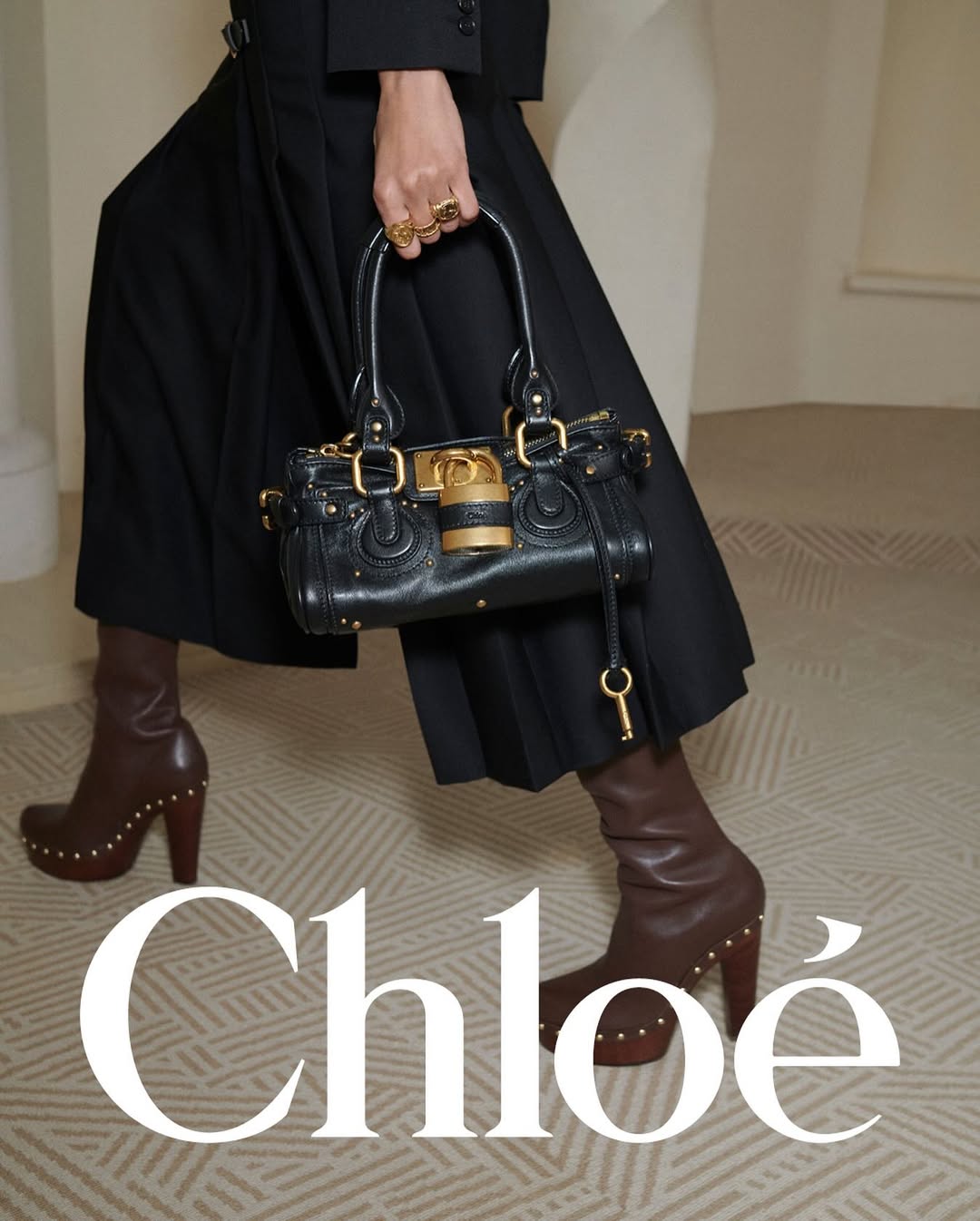 Chloé revived their Paddington bag, a key piece of the 2000’s originally worn by Sienna Miller, Lindsay Lohan and Mischa Barton.
Most people are not trying to return to earlier decades. They are trying to feel stable enough to move forward. When the future feels abstract or overwhelming, societies turn to the past not to escape, but to reaffirm identity.
What’s striking today is that this dynamic extends even to generations who never lived that past. Gen Z’s fascination with Y2K culture and late-90s/early-2000s aesthetics reflects not lived memory, but cultural projection, a search for recognizable codes, shared references, and emotionally legible worlds. In this sense, nostalgia becomes less about recollection and more about adoption.
In this context, nostalgia functions as a form of belonging.
This is why we see brands revisit original products, recognizable aesthetics, familiar narratives, and human-scale experiences. Not because innovation has failed, but because acceleration without grounding erodes trust.
The brands that resonate right now are not the ones shouting the loudest about what’s next. They are the ones that feel anchored, intentional, and emotionally coherent.
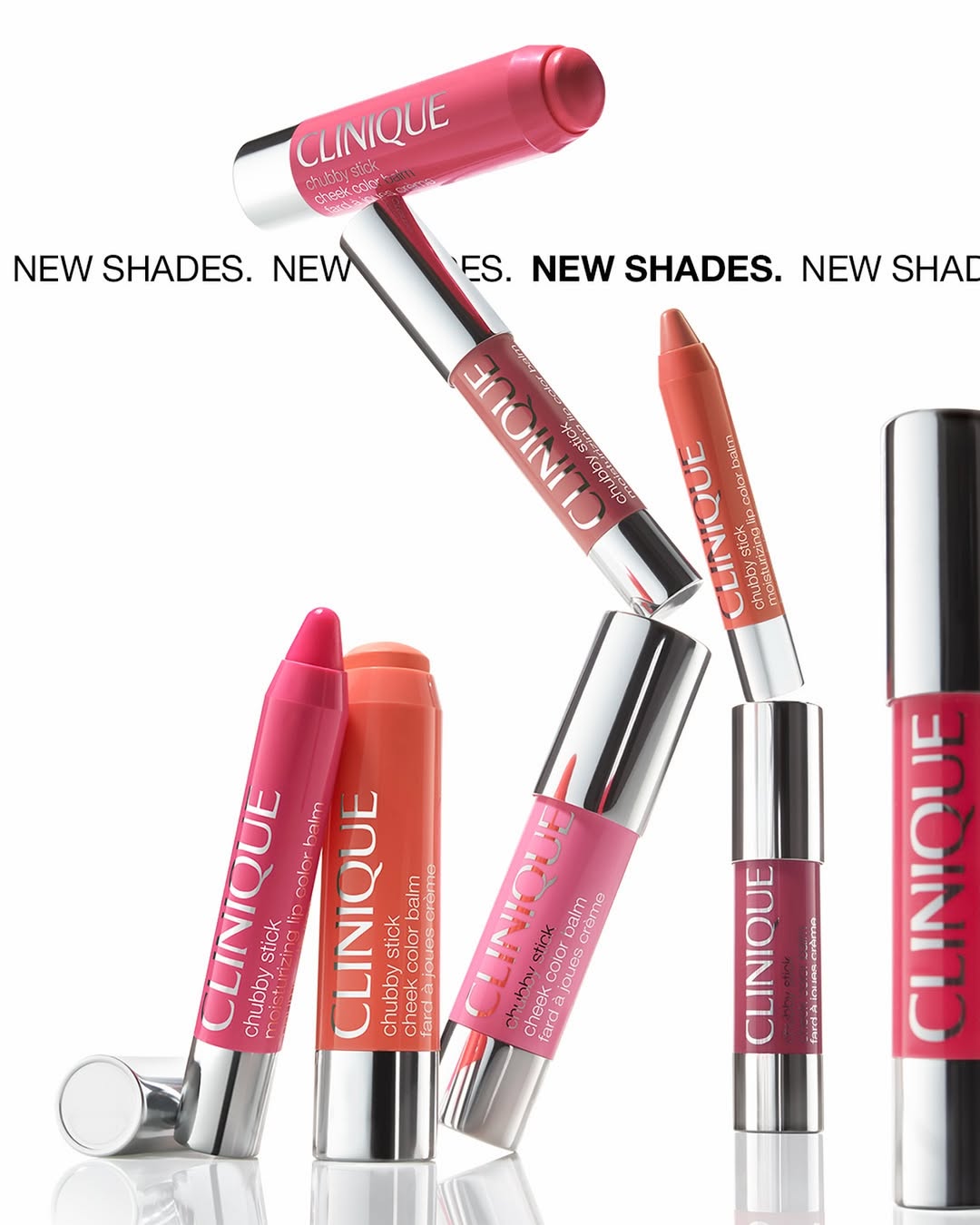 Clinique relaunched its Chubby Sticks, an iconic multi-use product originally launched in the late 90’s.
There’s a persistent myth in marketing that nostalgia is something brands “decide” to deploy. In reality, brands enter nostalgia cycles after the emotional demand already exists.
By the time a product is relaunched, a visual language returns, or a familiar reference resurfaces:
• The memory is already circulating
• The emotional need is already present
• The audience is already primed
Brands intervene because nostalgia offers built-in emotional equity, intergenerational resonance, and faster trust, especially in periods of uncertainty. In other words, brands are responding to culture, not leading it.
The strategic mistake is treating nostalgia as a surface-level aesthetic rather than a psychological signal.
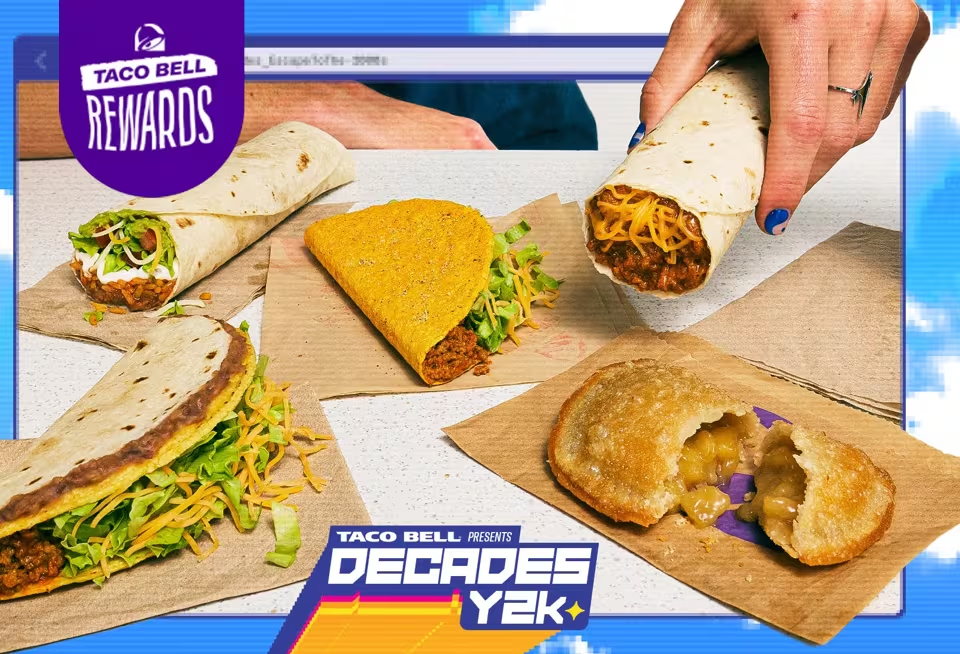 In September 2025, Taco Bell launched their Decades campaign and brought back menu items from the 2000’s.
Calling 2026 “the Analog Year” does not mean rejecting AI, digital experiences, or technological progress. Quite the opposite.
It reflects a shift in how technology is integrated into brands.
Digital experiences are being asked to feel slower, deeper, and more intentional. AI is increasingly expected to operate as infrastructure, not identity. Branding is moving away from pure optimization and toward world-building.
People don’t want fewer experiences. They want experiences that make sense.
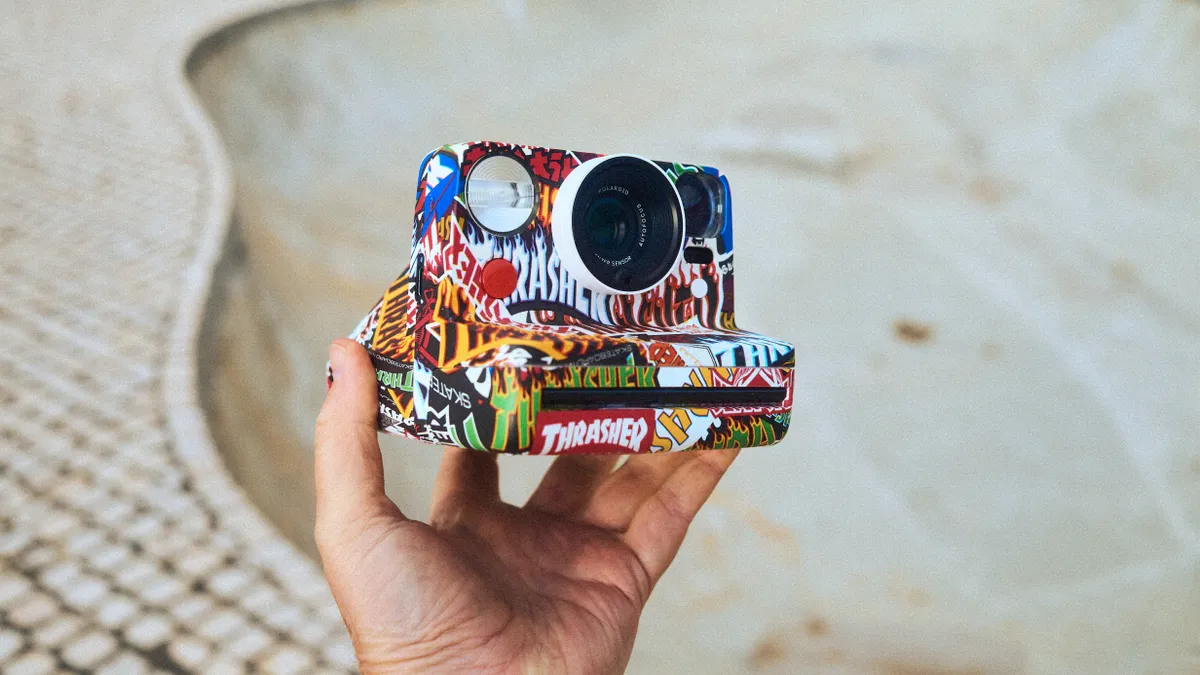 Polaroid and Trasher collaborated for a 90’s-inspired version of the Polaroid Now Generation 3.
The next phase of branding is not about doing more. It’s about doing enough, with clarity.
Brands that will stand out in 2026 are those that:
This requires cultural literacy, psychological understanding, and strategic restraint.
It requires knowing when to accelerate, and when to slow down.
At Storyline, this lens shapes how we approach brand positioning, branding, and content creation. Not as disconnected deliverables, but as part of a single experience designed to hold over time.
The Analog Year is not a campaign or a prediction. It’s a framework for understanding what’s already happening beneath the surface.
The articles that follow will unpack this shift from two angles:
first, by decoding the cultural forces shaping it, and then by examining how it plays out in practice.
Cultural lens
Applied lenses
Because in an accelerated world, the brands that endure are not the ones that chase attention, but the ones that know how to anchor it.